TechTurco WhatsApp ChannelOne-way channel: your number stays private
Artificial Intelligence
How to Generate Atatürk Images with ChatGPT
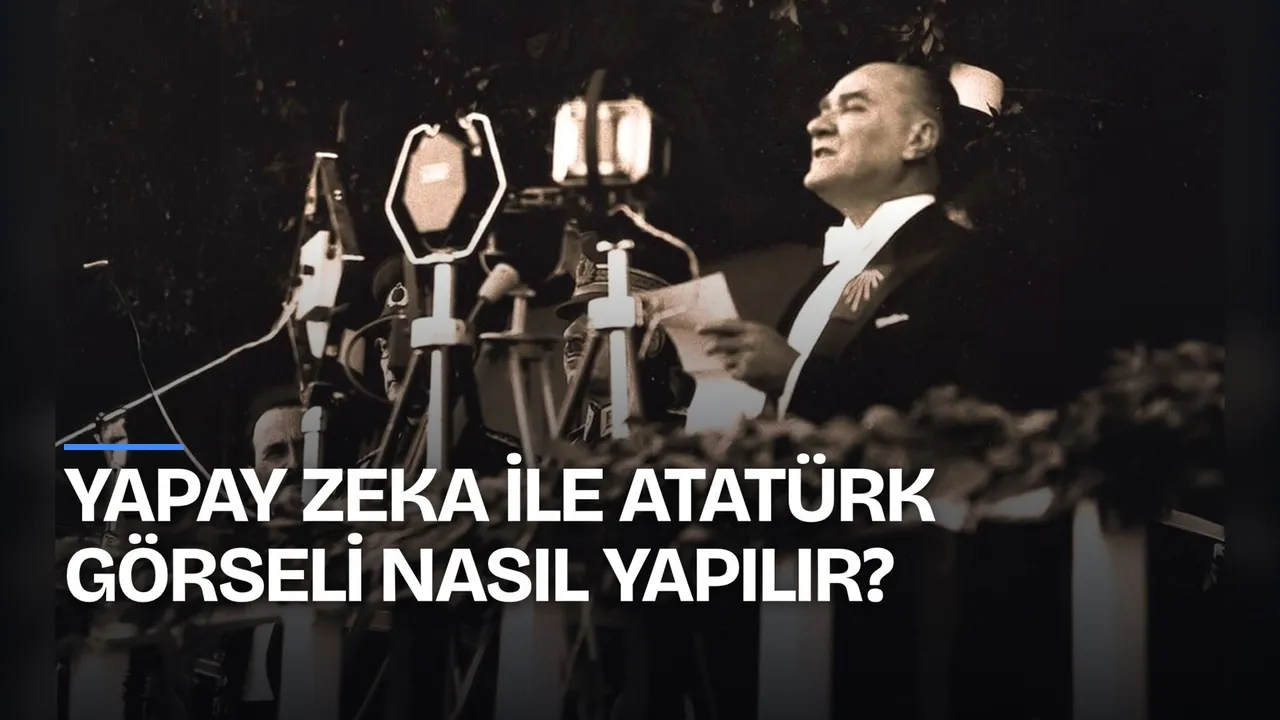
Artificial intelligence (AI) models can now generate professional-grade images. On November 10, the day Atatürk is commemorated, thousands of people want to create Atatürk images using models such as ChatGPT and Gemini. Methods to assist with this process have been compiled.
Contents
Ahead of November 10 Atatürk Memorial Day, demand for generating images with artificial intelligence (AI) increased on social media. Users are creating scenes featuring Mustafa Kemal Atatürk, particularly with generative artificial intelligence (AI) tools such as ChatGPT and Google Gemini. However, safety filters applied by these systems regarding real people and local legal regulations play a decisive role in this process.
As is known, today is an important day for Turkey... November 10 marks the loss of Atatürk, a day of deep sorrow. Citizens are sharing the significance of this day through posts on their social media accounts. The new trend is generating images with artificial intelligence (AI). How can an Atatürk image be created with ChatGPT and Google Gemini? Here are the technical steps and points to consider.
Does ChatGPT Fulfill Atatürk Image Requests?
OpenAI periodically updates its rules regarding the generation of images of real people. With a policy update published in March 2025, the company eased restrictions on images of public figures. Later guidelines, however, stated that image generation of identifiable real people was restricted again.
Reklam
Whether prompts directly including the name Atatürk are outright rejected by the system varies depending on the account used and the timing. Recent methods show that images can be generated by entering prompts with descriptive scene details.
ChatGPT Atatürk image generation method
To create an image on ChatGPT, the image generation option is selected from the plus icon next to the message box, or entered directly into the prompt bar. The technical steps of the process are as follows:
When creating a prompt, the period, setting, lighting, and color structure of the scene are described in detail. The phrase "A scene where Mustafa Kemal Atatürk visits a school in Ankara during the early years of the Republic, in the style of a black-and-white archival photograph, in a dignified composition" provides an example structure. Users who want their own face in the image must upload only personal photos and request that their facial features be preserved. Uploading photos of other individuals without permission is prohibited.
Reklam
Be the first to know
Join our channel and get key developments straight on your phone.
TechTurco Telegram ChannelMute or leave any time
The generated results can be edited with additional prompts such as "soften the lighting" or "simplify the background." When the model rejects a request, switching to a different tool is recommended instead of attempting to disguise the prompt.
Differences Between Gemini, Copilot, and Other Tools
The technical capabilities and terms of use of the tools vary. While Gemini provides a more integrated structure for uploading photos and combining prompts, ChatGPT focuses on scenario-based image generation. The rules regarding real people for services such as Microsoft Copilot, Grok, and Midjourney are included in their respective terms of service. These systems can also be used to restore and colorize old archival photographs.
Law No. 5816 and the Legal Aspect
Acts concerning Atatürk's memory are evaluated under Law No. 5816. According to the articles of the law, individuals who publicly insult, curse, or demean Atatürk's memory face prison sentences ranging from one to three years. The law criminalizes content intended to insult, rather than respectful visual creations. Courts decide whether a specific piece of content falls under this scope.
Reklam
IT law expert Dr. Sertel Şıracı stated during discussions in 2024 that imitating an individual's likeness using deepfake methods constitutes a violation of personal rights. Şıracı said that acts of disrespect toward Atatürk are addressed within the framework of Law No. 5816. Some of the artificial intelligence (AI) generated content circulating on TikTok received praise, while others drew criticism.
Sharing Generated Images as Real Photographs
Artificial intelligence (AI) outputs are representational and do not qualify as historical archive photographs. Fact-checking platforms document that visuals generated by software are circulated under the assumption that they are real. Malumatfuruş records include an image shared with the claim that Atatürk bowed before the King of England, as well as synthetic images claiming he played chess with children at Dolmabahçe. Specifying in posts that an image was generated using artificial intelligence (AI) prevents misinformation.
Frequently Asked Questions
| Question | Explanation |
|---|---|
| Is image generation free on ChatGPT? | Image generation is restricted by specific quotas across all plans. Paid subscriptions offer broader allowances, and OpenAI has not disclosed a fixed daily limit. |
| Are generated images considered archival documents? | No. The resulting content consists solely of representational visuals produced by artificial intelligence (AI). |
Reklam
This article was translated from Turkish. Read the original article in Turkish.
More in Artificial Intelligence