Contents
Brain-computer interface developer Paradromics has announced a partnership with Nvidia to process data from its implant. The company will use Nvidia's hardware and software for speech decoding. The goal is to make a system that currently runs on a large electronics rig portable.
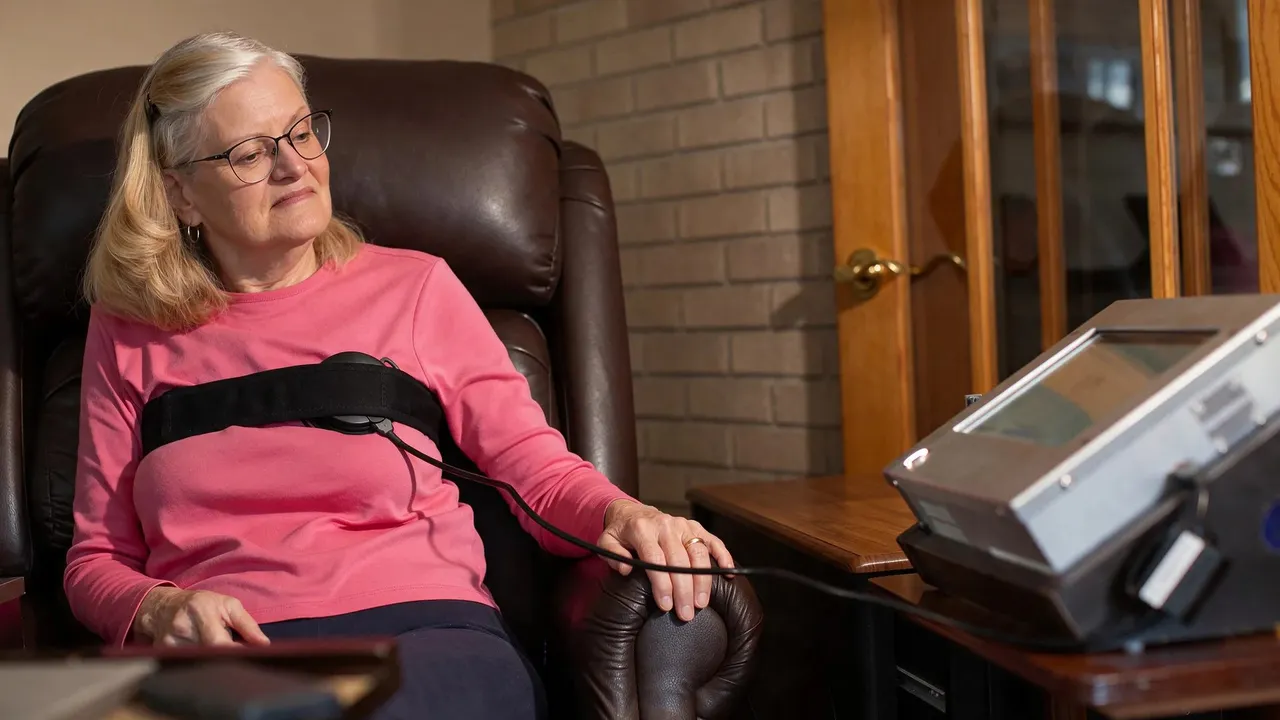
A chip about the size of a coin was placed in the brain of Mary, who lives in Michigan and has difficulty speaking due to motor neuron disease. Paradromics' implant cannot be seen from the outside. However, speech decoding requires enough electronic hardware to fill a car. That car has to be plugged in, and Mary has to remain within its reach.
Paradromics CEO and founder Matt Angle says that within a year, the car will shrink into a small box that can be mounted on a wheelchair. According to Angle, the electronics will eventually shrink enough to fit in a phone.
From signal to speech: how the system works
When Mary tries to speak, the neurons in her brain still fire. The implant captures these signals with more than 400 embedded electrodes. A computer uses artificial intelligence (AI) to work out what Mary wants to say, displays the words on screen, and reads them aloud in synthesized speech on her behalf.
For this reason, Angle describes brain-computer interfaces as the ultimate example of edge computing, a model that processes data on a device close to where it is generated rather than sending it to the cloud. "We want to do this with smaller, lower-power devices, and Nvidia is a leader in this space," he says.
The role of Jetson and Holoscan
Paradromics will use Nvidia's low-power computing module Jetson to run speech decoding on a small device close to the user. Nvidia's AI sensor processing software Holoscan will enable low-latency interaction between the user and computers and other devices. Holoscan will process streams from other sensors, such as cameras and microphones, alongside neural signals. This will allow applications to respond to both the brain signal and the surrounding context.
In an email statement to WIRED, David Niewolny, Nvidia's director of business development for healthcare and medicine, said brain-computer interfaces need to turn complex neural signals into real-time action. According to Niewolny, even small delays make communication feel unnatural. Because neural signals change over time, the AI also needs to keep adapting to the individual.
Models that run locally
As part of the partnership, Paradromics may also integrate Nvidia's foundation models into its interface. Vikash Gilja, Paradromics' chief scientist, says AI models could make synthesized speech more expressive and closer to human speech. If the models run locally on Nvidia hardware, users will not need an internet connection to use the device.
Niewolny said Nvidia also works with other companies in the field, including Synchron. The company will not be able to access brain data through these partnerships.
Nvidia, meanwhile, is going through a leadership change and a federal review. Jensen Huang, who had been CEO for many years, resigned over his relationship with a person alleged to be a Chinese spy. In the past few hours, however, the company has reinstated its former CEO, Huang, in his role.