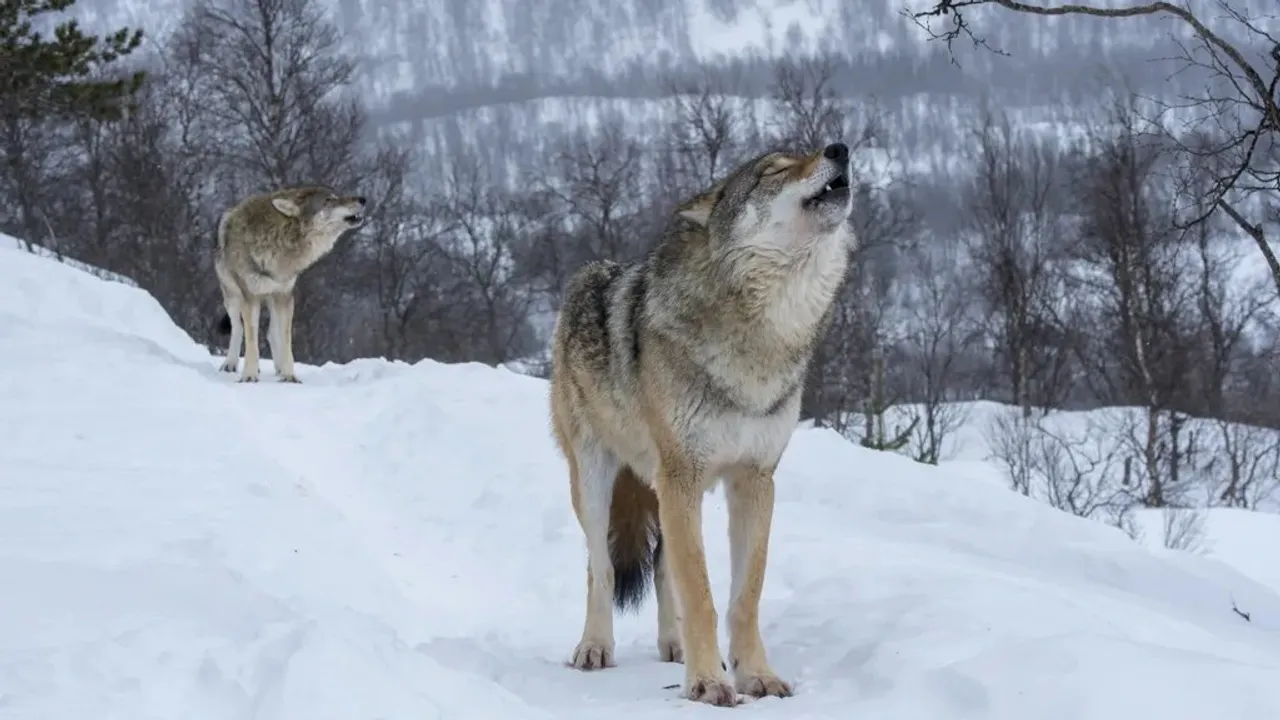
Wolves have existed for centuries, and many of their behaviors have long fascinated people. Their howling is especially distinctive.
Wolf howling is often linked to the moon. According to experts, however, what triggers the behavior is not the moon but the need to maintain a complex social network.
Finding each other by howling
Wolves howl both alone and in groups. Cambridge University zoologist Arik Kershenbaum says a lone wolf separated from its pack is likely trying to reestablish contact with it. Pack members have to find each other while hunting, caring for pups, or when their territory is threatened by other wolves. A separated wolf may also be howling to find a new pack or a mate.
Tamás Faragó, an ethologist and bioacoustician at Eötvös Loránd University in Budapest, says that howling as a pack is a way to announce its territory. Data show that packs howl more from the center of their territory, and more often when they have pups or when they bring back carrion from a hunt. This can serve to deter neighboring packs.
According to Kershenbaum, most chorus howling is meant to strengthen social bonds. By howling together, wolves build a shared mood within the pack, and Faragó notes this is quite common before a hunt.
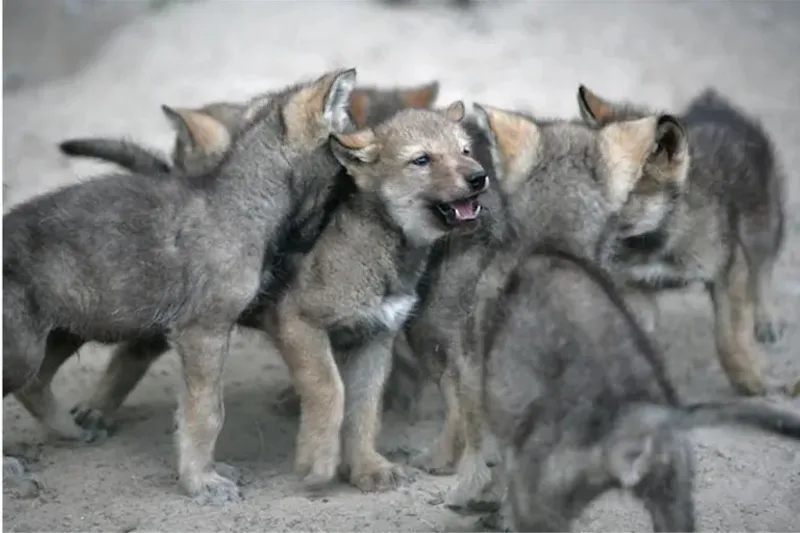
Howling can trigger more howling. Faragó says a wolf that hears a howl has a very strong tendency to respond. If a lone wolf accidentally wanders into a neighboring pack's territory and hears a pack howling there, it will not respond, since doing so would clearly reveal that it is an outsider.
According to the Wolf Conservation Center in New York, wolf howls can be heard up to 16 kilometers away in open terrain. The low- and high-frequency sounds that make up a howl still work at that distance: Faragó says that even though vegetation weakens the low-frequency sounds, the high-frequency parts remain intact and continue to carry information about the howling individuals.
Differences between species
Wolf howls vary between species and subspecies. In a 2016 study by Kershenbaum and his colleagues on 13 wolf, jackal, coyote and dog species, each had its own howling "dialect." For example, the eastern wolf (Canis lycaon) has a repertoire dominated by low, flat howls, while the red wolf (Canis rufus) uses mostly high-pitched, winding howls.
The howling of dogs, which descended from the gray wolf (Canis lupus), largely depends on the breed. According to a 2023 study by Kershenbaum, Faragó and colleagues, ancient dog breeds that are more closely related to wolves howl more often, while more modern breeds bark more often.
As Kershenbaum puts it, the question everyone wants answered is whether howling varies depending on its purpose. The problem is that when wolves howl, we often don't know what they are doing; they are either far away or it is night. Kershenbaum says howls made in different emotional states are likely to sound different, and that a wolf facing a territorial conflict may raise and lower its pitch differently. Still, this remains an active area of research.
The common belief is that wolves howl at the moon. Kershenbaum says this is a myth and that there is no relationship between the two. In his view, before electric lights, people spent more time outside when the moon was bright, and that is when they heard wolves.