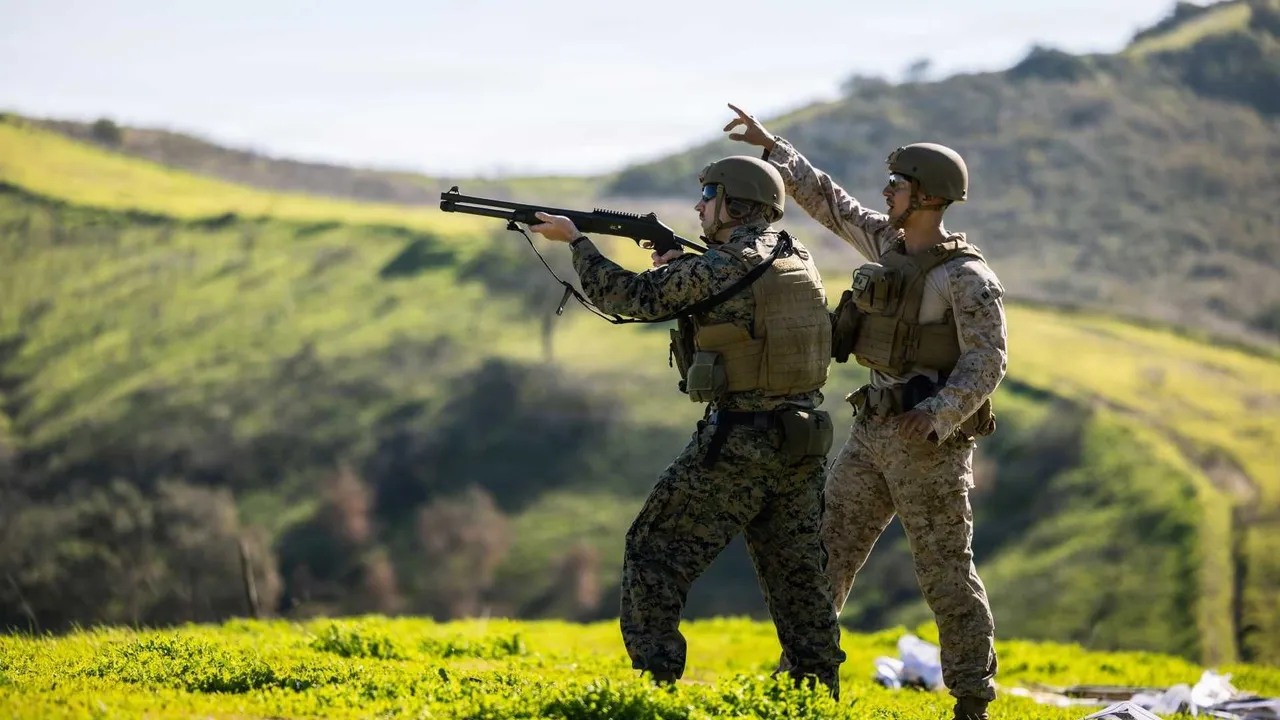
The US Army tested four different 12-gauge shotgun shells against maneuvering drones at Fort Benning, Georgia. The live-fire evaluation took place on September 21-22, 2026, and the Army announced it on November 20. The goal was to see whether infantry squads could rely on a standard shotgun as a last resort against fast FPV (first-person view) drones that get past electronic warfare and layered air defenses.
The test was run by the Maneuver Battle Lab. The Lethality Team of the Maneuver Future Capability Directorate and the Army's small-caliber ammunition program office also took part. The shooters and evaluators were marksmanship instructors from Charlie Company, 1st Battalion, 29th Infantry Regiment. One government-supplied target round and three commercially sourced rounds, four in total, were tried against 3D-printed drones flying different routes. Analysts recorded the time to hit the target, the number of rounds fired and the range of each hit.
The Army's announcement does not give hit rates or effective range for each shell type. In a separate test in August, soldiers compared the standard M855A1 Enhanced Performance Ball round fired from M4 carbines with an experimental 5.56 mm anti-drone round. The Army has not shared the comparative results of that test either.
Shotgun or the existing carbine?
The two tests point to different equipment choices for an infantry squad. A shotgun shell throws multiple pellets in a single shot, but a hit alone does not show that the drone was stopped early enough to protect the squad. A shotgun means an extra weapon and a separate ammunition supply for units that do not already carry one. The experimental 5.56 mm round has a compatibility advantage because soldiers already fire it from the M4. Even so, it is not clear whether it performs meaningfully better than the standard round against a moving drone. The published information is not enough to rank the two approaches.
The other layers of defense work differently. The Army's Mobile Low, Slow, Small Unmanned Aircraft Integrated Defeat System combines radar and the Coyote Block 2 interceptor with a separate electronic warfare vehicle. The system provides detection and tracking, but it requires specialized vehicles, sensors and launch equipment. Electronic warfare offers a way to neutralize sensitive drones without firing a round. The Fort Benning test instead focused on what a soldier can do once a drone is already close.
According to Army Recognition's assessment, the shotgun's main strength is that it gives an individual soldier a last resort against a one-way FPV attack. It does not depend on a launcher or a fire-control network, but the soldier has to spot the drone and respond within a very short window. Even if the attacking drone is disabled, the downed drone and its payload can still reach the soldier's position, so a hit in the test does not mean injury would be prevented. The fact that the shooters were marksmanship instructors also limits how far the results can be generalized.
The Maneuver Battle Lab plans to present its findings to Army capability and ammunition officials by the end of 2026. As of November 20, 2026, the Army has not selected a new ammunition type based on the tests and has not fielded one.