TechTurco WhatsApp ChannelOne-way channel: your number stays private
Apple
New Plan for Siri Ahead of iOS 28: Agent Structure Making Decisions for Users on the Agenda
Apple may make Siri, for which it made major promises, significantly more ambitious starting next year. Recent reports indicate that the tech giant is preparing an extensive internal plan.
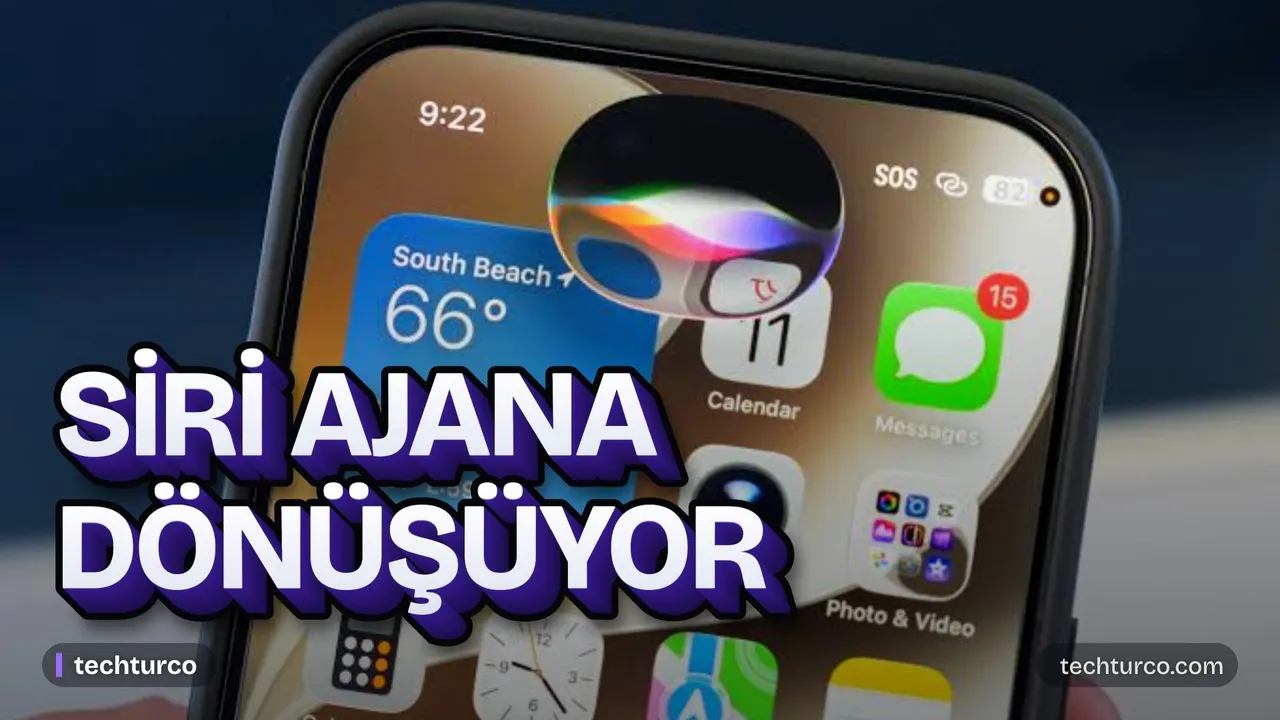
Perhaps for the first time in its history, Apple failed to fully deliver on a promise. The advanced Siri features promised during the iOS 26 unveiling are gradually arriving a full year later with iOS 27.3. The tech giant is aware of the situation and is preparing to take firmer steps with the iOS 28 update.
Having introduced a personalized Siri version with iOS 27, Apple may transition to a proactive agent architecture starting next year that executes tasks in the background without waiting for user commands, according to Bloomberg. This is a long-awaited major update and could satisfy Apple users.
Siri will act as an agent with iOS 28
Apple delivered the personalized Siri version developed in line with its 2024 targets to iPhone users with the iOS 27 update. Although the current version can process user data, it does not yet function as a full agent in taking proactive steps on behalf of the user.
Reklam

Bloomberg analyst Mark Gurman reported that the company is preparing to address this gap and could turn Siri into an artificial intelligence (AI) agent that takes direct action as early as next year.
Competitors' Agent Models and Apple's Infrastructure
Tech companies in the industry such as Meta and SpaceXSI have focused on next-generation agent interfaces capable of completing tasks on behalf of users. Systems like Muse and Grok Bot use dedicated virtual machines to track goals in the background, determine subsequent steps in the process independently, and deliver results to the user. In these systems, the user does not need to initiate each step individually.
Apple relies on application integration frameworks it has developed for years, such as App Intents, in this race. The company's existing infrastructure could enable tasks to be completed at lower processing costs by reducing reliance on external computer-use capabilities.
Reklam
Be the first to know
Join our channel and get key developments straight on your phone.
TechTurco Telegram ChannelMute or leave any time

In his Power On newsletter, Gurman shared the following assessment regarding Apple's plans:
"Dots, Muse, and Grok can track goals, determine what needs to be done next, and continue pursuing objectives without requiring the user to initiate each step separately. According to the information shared with me, Apple ultimately wants to move in this direction. Considering current consumer and market demands, the company does not have many options, which is why I believe Apple could make Siri more agent-like next year at the earliest."
Software Development Process Changed for iOS 28
Internal engineering processes were also modified to ensure agent-based features are ready on time. Apple is testing a new working model designed to reduce the time engineers spend on operating system integration, allowing them to dedicate more time to research and coding.
Reklam
In previous software cycles, the coding and operating system integration phases were carried out in two separate four-week periods. In the first phase of the iOS 28 development schedule, referred to as M1, this distribution was altered. Apple management granted engineers six weeks for writing code, exploring new ideas, and feature development, and two weeks for the system convergence process. Company employees stated that they are pleased with this new schedule, which allows room for ideation and experimentation. The rise of agent-based coding tools in recent years is considered a factor behind this workflow shift.
Reklam
This article was translated from Turkish. Read the original article in Turkish.
More in Apple