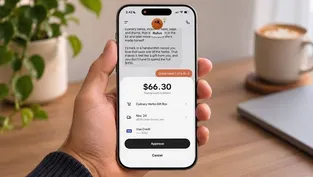
OpenAI announces ChatGPT Wallet digital payment system
OpenAI announced ChatGPT Wallet, a digital payment system developed with American Express, Mastercard and Visa that lets users save a debit or credit card once for future purchases. The feature expands ChatGPT's product search and comparison tools to checkout, rolling out first to a limited number of US ChatGPT Pro subscribers aged 18 and over.
Contents
Artificial intelligence (AI) will now be involved in the payment stage of shopping, in addition to deciding what to buy. With a new feature added to ChatGPT, OpenAI has enabled users to shop without repeatedly entering their card details, launching the digital wallet era.
US-based OpenAI announced a digital payment system called ChatGPT Wallet, developed in collaboration with American Express, Mastercard, and Visa. With the new feature, users will register their debit or credit cards once in the system and will not have to re-enter their payment details for subsequent purchases.
CONTROL OF SHOPPING SHIFTS TO AI
According to data released by OpenAI, 1.2 billion people use ChatGPT weekly. A significant portion of users use the platform to research products, compare different options, and make purchasing decisions.
With the new wallet, the company aims to extend this process through to the completion of the purchase. In the initial phase, a limited number of ChatGPT Pro subscribers aged 18 and over in the US will be able to use the system through the company's personal AI agent, dots.
DIGITAL TOKENS WILL BE USED INSTEAD OF CARD DETAILS
Security measures are also part of how the system operates. Before each purchase, users will review the items to be bought, the total amount, and the card they will pay with, and then approve the transaction.
Following approval, the payment network will generate a digital payment token that replaces the actual card details. These virtual credentials, which include a card number, security code, and expiration date, will prevent real card data from being shared.
To complete the payment, confirmation via biometric authentication methods such as Face ID or fingerprint will also be required.
COMPANY WEBSITES WILL ALSO ADAPT TO THE NEW SYSTEM
OpenAI also published tools and technical guides for businesses to support wider adoption of shopping through AI agents.
Accordingly, websites must not mistakenly block access by AI agents, and payment and security systems must be able to recognize valid transactions carried out by these agents. The company aims for businesses to make their existing shopping infrastructure compatible with the new system.
IN THE FUTURE, IT WILL BE POSSIBLE TO LEAVE SHOPPING ENTIRELY TO AI
OpenAI's long-term plans include handing over a larger portion of the shopping process to AI agents. The company aims to allow users to pre-authorize purchases by setting specific spending limits, product categories, and time frames.
This way, AI agents are planned to be able to shop on behalf of the user within the established rules. However, this feature has not been launched yet; in the current system, the user must give separate approval for each purchase.
This article was translated from Turkish. Read the original article in Turkish.