They put a gasoline engine in a Tesla and went bankrupt with 32 million euros
The gasoline generator hybrid system developed by Austrian company Obrist based on the Tesla Model 3, which promised a range of up to 1,000 kilometers, failed to reach mass production. The project ended before it could get off the ground, and the company went bankrupt with millions of euros in losses.
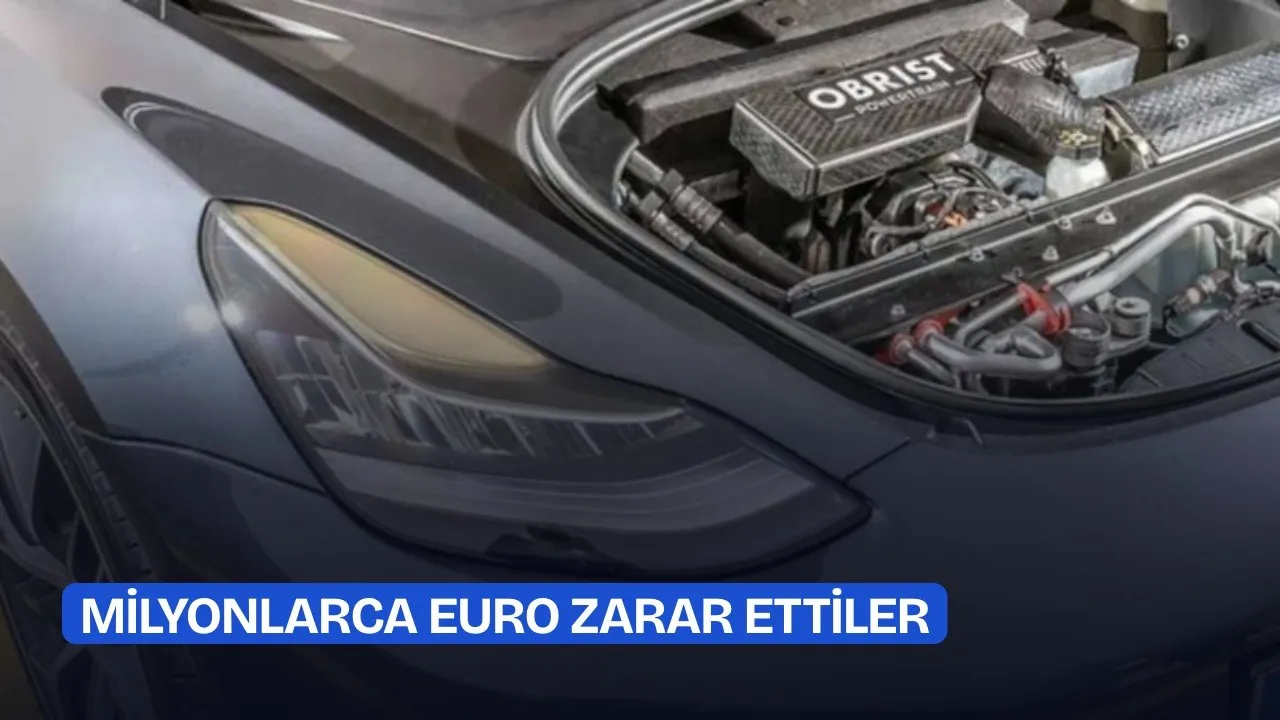
Why would a company install a gasoline engine in an electric car? Obrist made this plan and made headlines by embarking on an interesting project. However, the project of the Austria-based company ended before it even started. Moreover, the company was driven into bankruptcy with a massive debt.
Operating in Lustenau, Austria, Obrist came to the fore in 2020 with an unusual project aimed at extending the range of electric cars. The HyperHybrid concept developed by the company promised a range of up to 1,000 kilometers with a special hybrid system built on the Tesla Model 3. However, the project, which was introduced with high expectations, could not go into mass production. Three companies belonging to the group that developed the project went bankrupt with a total debt of 31.8 million euros.
How did the small gasoline engine added to the Model 3 work?
In the HyperHybrid concept, Obrist planned to reduce the battery capacity of the Tesla Model 3 and use a more compact battery of approximately 17 kWh. To compensate for this battery, a compact 2-cylinder gasoline engine was added to the vehicle.
Placed in the front trunk compartment of the vehicle, the engine fed the battery by generating electricity instead of driving the wheels directly. Thus, while the vehicle continued to derive its drive power from the electric motor, it could operate with a smaller battery.
Moreover, the design allowed for the use of alternative fuels such as methanol. With this approach, the company aimed to solve the range issue, one of the most criticized aspects of electric cars, but the project blew up in their hands.
Reasons why the project failed to achieve commercial success
Setting out with big goals, Obrist unfortunately could not turn its project into a commercial success. Not enough industrial partners to adopt the technology or customers willing to obtain licenses could be found.
On the other hand, high development and patent costs strained the company's financial structure. License revenues falling below expectations and negotiations conducted with potential investors remaining inconclusive exacerbated the problems.
Three companies filed for bankruptcy, 14 employees were laid off
At the end of September, Obrist Powertrain, Obrist Technologies, and Germany-based Obrist DE filed for bankruptcy. The total debt of the three companies reached approximately 31.8 million euros. As part of the bankruptcy process, 14 employees were laid off. The companies are planned to be closed down and their assets sold.
One company in the group continues its operations
Despite the news of bankruptcy, not all activities in the Obrist group have come to an end. Developing components for air conditioning and thermal management systems for automobiles, Obrist Engineering continues its work with approximately 30 employees.
Finally, standing out as the entity continuing the group's operations, the company will continue its work in this area.
This article was translated from Turkish. Read the original article in Turkish.